 Kelly J Hayes | WineInk
I was in Four Dogs Wine and Spirits looking for a bottle of a particular California Chardonnay, when I heard a woman behind me ask the wine guy, “Can you help me find some organic wines? I need to make a change.”
What a refreshing request. The wine guy was equally refreshed and began to walk around the stacks of wine, pulling bottles from here and there that met the woman’s criteria.
I couldn’t help myself and picked up a bottle of Primitivo from the Italian selections and interjected, “I like this one and it’s made from certified organically grown grapes in Italy.”
Both the wine guy and the woman liked my suggestion, and the wine made its way into her case of organics. I have no way of knowing, but I’m hoping she enjoyed the Lunaria – Ruminat Primitivo 2020 that I suggested, made from the Italian Primitivo grape that we know better as Zinfandel. I am guessing she did, as it is delicious.
But the major theme of the experience – as Earth Day approaches and just a week after the United Nations issued its most dramatic warning yet about the impacts of climate change – is that this woman, a longtime local, was making a conscious decision to make a contribution to improving the state of the world by improving her selection of wines. Amen.
It may take a village and it may take the broader financial forces on Earth to save the planet, but it all starts with a single action, much like the one I witnessed at Four Dogs.
To be clear, despite being a gift from the Earth and something that man has produced in conjunction with mother nature since the beginning of recorded time, wine can be a messy business. The carbon footprint of winemaking and distribution has many impacts on the environment.
Consider the initial process of growing grapes: While there are concerted attempts to “green” the landscape, there are still winemaking concerns around the world that use chemicals and fertilizers in the vineyards, harvest by machine, and use vast quantities of water in the production process. And without doubt the biggest toe in the industry’s footprint is the amount of fuel and energy it takes to package wine in bottles – very heavy glass bottles – and then transport them to consumers around the globe.
But, like the woman in Four Dogs, there are entities in the wine industry who know that they “need to make a change.”
On an individual level, the last decade has seen a significant shift by many wineries to take their vineyards to organic status, or even further, to certified biodynamic status. In these cases, wineries make changes to their ecosystems that will allow them to be certified by various monitoring bodies and label their bottles as organic or biodynamic.
According to the U.S. Department of Agriculture, for a wine to be labeled as organic “both the growing of the grapes and their conversion to wine must be certified. This includes making sure grapes are grown without synthetic fertilizers and in a manner that protects the environment and preserves the soil. Other agricultural ingredients that go into the wine, such as yeast, also have to be certified organic.”
A study published by Market Research.com in 2021 showed there was “20% annual growth in 2019 and 2020” of the production of organic wines and estimated that there are 1,500-2,000 organic wine producers in the world today. And much of that growth is financially motivated because there have been people around the planet who, like the lady in Four Dogs, feel better about uncorking a bottle of wine grown in a vineyard that is pesticide free.
But, in addition to those wineries that go through the process to achieve actual sanctioning, there is a far larger group of wineries that have become cognizant of improving the way they meet the challenges of a changing landscape. No pun intended.
In 2019 Familia Torres of Penedes, Spain and Jackson Family Wines of California – both family-owned entities with international operations throughout the world – partnered to form International Wineries for Climate Action (IWCA). The stated focus of the organization is to enlist wineries in programs that commit them to “reducing their greenhouse gas emissions, improving their land stewardship, protecting biodiversity, and being socially-responsible, locally-engaged businesses.”
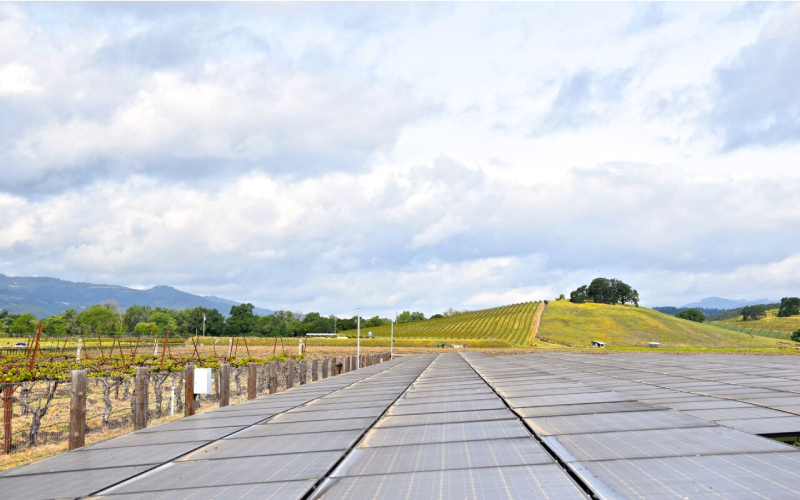
In less than three years, the IWCA has created a three-tier qualification system that encourages member wineries to achieve “Gold Status” and strive to create winemaking operations that are powered by at least 20% onsite renewable energy while demonstrating a consistent reduction of emissions. The IWCA has developed a methodology to measure a winery’s greenhouse gas emissions footprint. The spreadsheet lets individual wineries begin to track their current output and measure improvements.
Some of the most prominent wineries on Earth – including Cullen Wines in Margaret River Australia, Château Troplong Mondot in Bordeaux, France, and California’s Silver Oak/Twomey and Spottswoode Estate Vineyard & Winery – are members of the growing organization that will likely be a significant player in quantifying and reducing carbon emissions in the decades to come.
“We enthusiastically support IWCA in its mission to decarbonize the wine industry so as to be actively engaged in protecting our planet and our agriculturally-based businesses from the worst of climate change,” says Beth Novak Milliken, President & CEO, Spottswoode Estate Vineyard & Winery about their involvement.
Then there are regional organizations that are taking a role in cultivating best practices in both vineyards and the relationship between the industry and the communities that they live in.
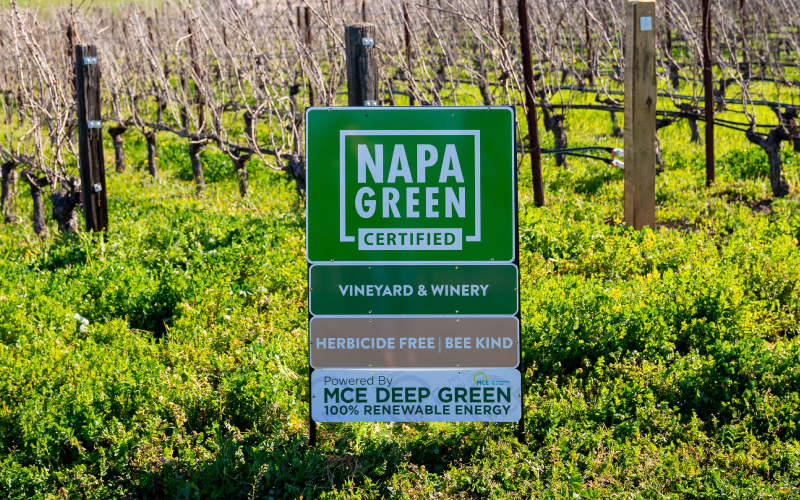
In California’s Napa Valley, a flourishing environmental program called “Napa Green” provides certification to wineries and vineyards that take comprehensive steps to protect and improve the environments where wines are grown and made. Napa’s history of stewardship extends back to 1968, when citizens helped establish the first Agricultural Preserve in America. Napa Green programs began in the early 2000s as a natural extension of that legacy. The goal is to take practical steps to limit the impacts of winemaking on the land in the Napa Valley and, where possible, make improvements.
This year the organization adjusted to the ever-changing environment by restructuring its sustainability standards and introducing a certification program called “Napa Green Vineyard” with a focus on key concerns that include climate action, regenerative farming, and social equity.
In an industry as global and diverse as wine, it is difficult to make rapid changes. But what is clear is that, as we approach Earth Day 2022, there are forces for good who are making substantial efforts to address the challenges of climate and social concerns. As long as there are professionals and consumers – like the woman in Four Dogs – who are opting to make changes, things will continue to get better.
About Napa Green: The Napa Green 501c3 is a global leader in sustainable winegrowing, setting the highest bar for sustainability and climate action in the wine industry. Napa Green facilitates whole system soil to bottle certification for wineries and vineyards, and provides the expertise, boots-on-the-ground support, and resources to continually improve. Learn more at https://napagreen.org/participating-members/.
Anna Brittain
Napa Green
+1 805-636-3329
email us here
Visit us on social media:
Facebook
LinkedIn
Instagram