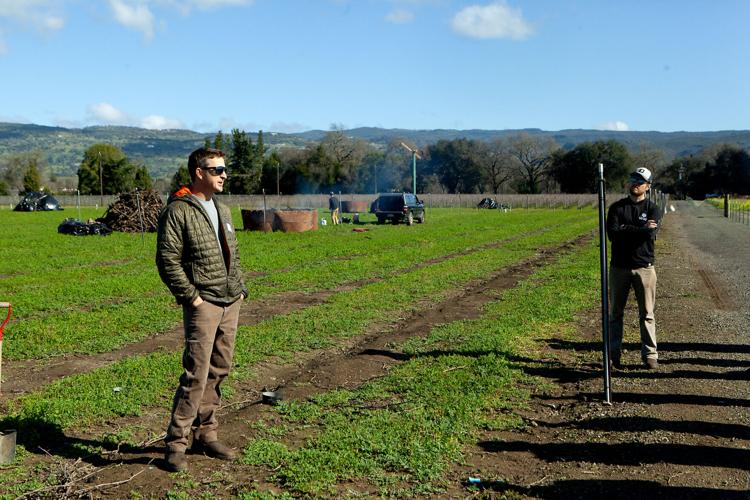
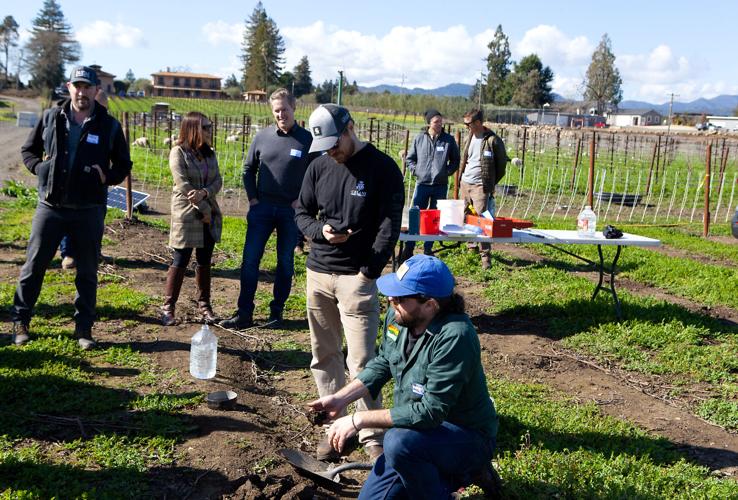
On Feb. 12, Celani Family Vineyards hosted the first Napa field day for the One Block Challenge, marking the official start of the challenge in Napa Valley. About 50 growers, winemakers and industry professionals gathered to meet one another and the One Block Challenge team, as well as take a walk through the vineyards and learn how to begin collecting important data on their chosen blocks.
On hand at the event was Caine Thompson, one of the faces of the One Block Challenge. A regenerative viticulture specialist, Thompson oversees 15,000 acres at O’Neill Vintners and Distillers while driving major organic conversions in New Zealand and California.
Thompson told attendees that the mission of the One Block Challenge — to have 10% of the world’s vineyards practice regenerative farming by 2035 — is deeply personal. His father, he said, died due to overexposure to agricultural chemicals.
It’s important, Thompson said, to bring the entire winery team in on the benefits of regenerative farming. As an example of promoting this buy-in, he talked about how, over the last few years, he’s done side-by-side tastings at his vineyards, showing everyone on the team the difference it can make in the wine glass.
Napa Green’s vineyard program director Ben Mackie walked them through a series of tests and best practices for collecting soil samples and other valuable data, to be used by each participating vineyard on their journeys toward regenerative practices.
Throughout the demonstration, Jordan Lonborg, the regenerative consultant at Coastal Vineyard Care, chatted with attendees about his own journey with regenerative farming in Paso Robles, stressing the need for a complete change in mindset when it comes to viticulture and what a vineyard should look like.
“You’ve got to push,” he added. “You’ve got to collect data and really get an understanding of what is happening underneath your feet.”
Lonborg also highlighted the value of the One Block Challenge in putting together a community of like-minded wine industry members all pursuing the same goals. Although regenerative farming likely looks very different on the valley floor than on Howell Mountain, Lonborg said everyone can gain extensive knowledge from one another.
“There are some legends here that have been farming this way for so long,” he said. “Lean on the community. There are so many mistakes to be made, and this is such an incredible opportunity to ask questions and learn about some of the mistakes we’ve made.”
For Owen, the event highlighted his desire to help build a community of industry professionals dedicated to regenerative farming practices. Having Beckstoffer Vineyards there, for example, which has long advocated for more natural farming practices, was inspiring.
“They’ve figured out what is needed in their vineyards better than anyone else,” Owen said. “The efficiency they bring is crazy.”
Owen said he knows the only way for the industry to get to a better understanding of regenerative farming practices is through community and collaboration. He added that he hopes each participant can learn and grow from the others.
“It’s on us to make sure we don’t let this fizzle out,” Owen said.
For Celani Family Vineyards, Owen said the goal is a dramatic increase in the quality of the wines it produces. Although the vintages were already exceptional, Owen said he hopes regenerative practices can add an extra layer of nuance and complexity to the product.
“We’re doing a bunch of positive things for the vineyard, for the brand, for the community, and ultimately for the wine,” he said.